THE
Event
Why Wedding Flowers Cost More in Los Cabos
June 26, 2026
Why Wedding Flowers Cost More in Los Cabos — and How the Best Designs Get Made Anyway
Every couple who falls for a Los Cabos wedding eventually asks the same question, usually somewhere between the first mood board and the first quote: why do the flowers cost what they cost? It is a fair question, and it deserves an honest answer rather than a defensive one.
Because once you understand what it takes to bring a single peony to a terrace above the Sea of Cortez, the number stops looking like a markup and starts looking like a logistics achievement. This is the part of destination planning no one explains well — so let us explain it properly.
Cabo is a desert, and the blooms you love are not from here
Los Cabos sits at the southern tip of the Baja peninsula, where the landscape is dramatic, arid, and genuinely beautiful — but not hospitable to the soft-petal luxury blooms that define a romantic tablescape. Garden roses, peonies, ranunculus, hydrangea: almost none of it grows here. The arid heat that makes Cabo perfect for a sunset ceremony is the same heat that makes local cultivation of delicate flowers nearly impossible.
So the flowers arrive from somewhere else. Most are sourced from the wholesale markets of Mexico City, and for certain varieties and seasons, flown in from the Dutch auctions in Holland. By the time a stem reaches your centerpiece, it has already traveled further than most of your guests.
What you are actually paying for
When a floral estimate lands in your inbox, the line item simply says “flowers.” What it actually covers is a chain of decisions made long before anything reaches your table:
- Import duties and customs clearance, plus the paperwork to move perishable goods across borders on a fixed wedding date that cannot move.
- Cold-chain refrigeration — blooms move straight from the airport into professional-grade, climate-controlled storage, because a few hours of Baja sun can undo an entire order.
- Transport surcharges that typically add 20–35% to flowers and production equipment brought in from the mainland.
- Backup sourcing relationships, so that if a shipment is delayed or held, your design is protected rather than improvised.
- The design, installation, and breakdown labor that turns loose stems into the thing you imagined.
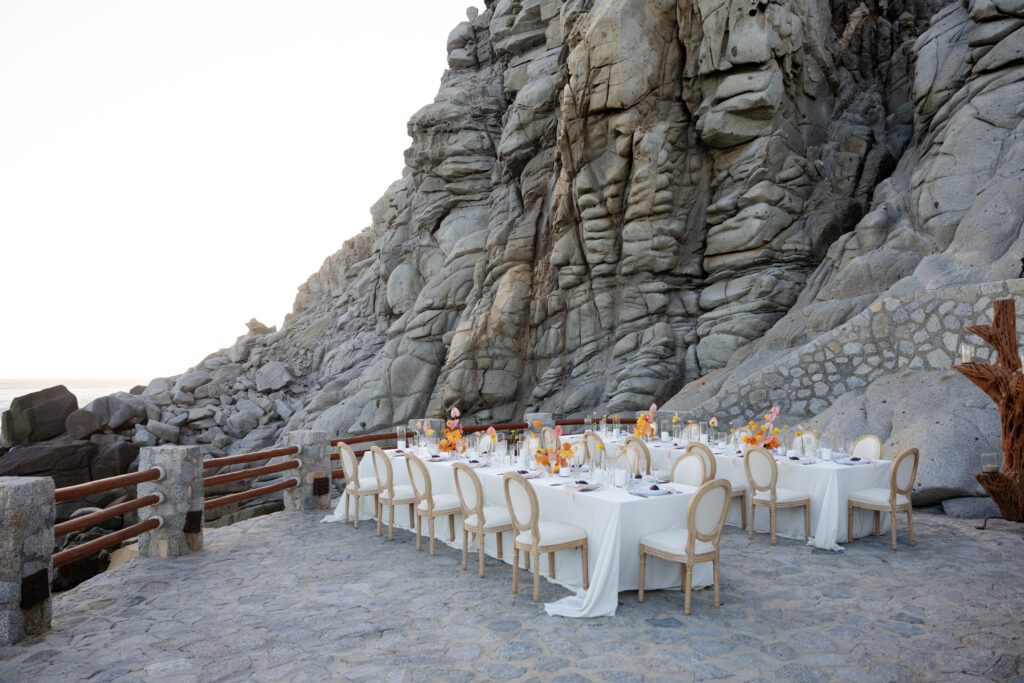
In other words, you are not paying for flowers. You are paying for everything that has to be true for those flowers to be flawless at six o’clock on a Saturday, on a cliff, in the wind.
Why this matters more for some flowers than others
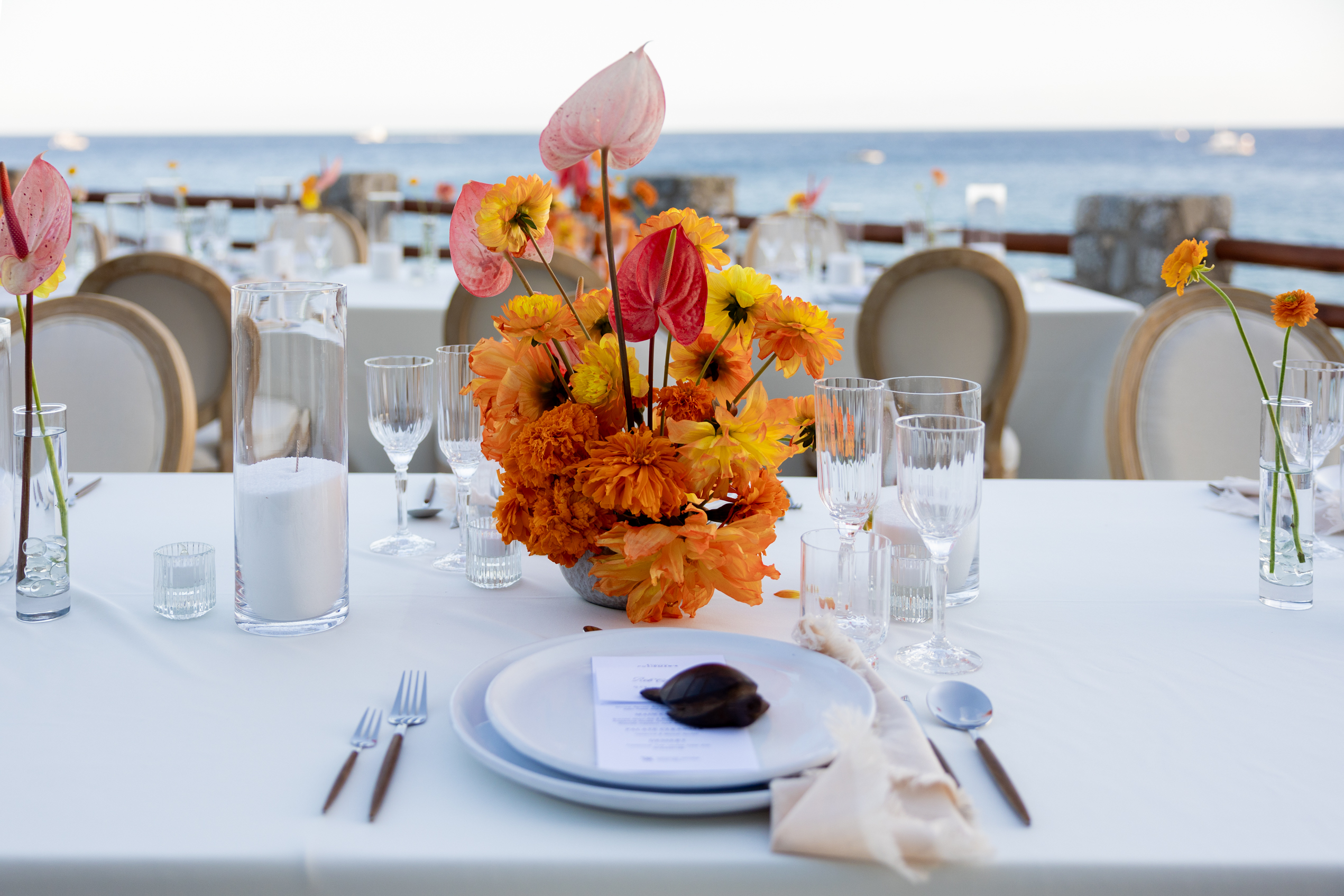
Not every bloom carries the same risk. A peony in July is a gamble; a textured, heat-tolerant palette in the same month is a sure thing. The most beautiful — and most cost-aware — designs lean into varieties that travel well and hold up in warmth, then build drama through texture, scale, and structure rather than relying on a single fragile flower flown in at a premium.
This is also why substitution clauses exist in good floral contracts. They are not a vendor protecting themselves at your expense; they are a designer protecting your wedding from a supply chain you will never see.
The planner’s view: this is where a production partner earns its place
If you are a planner reading this, none of it is news — but the exposure is the point. A florist who only sells stems leaves the hardest part, the logistics, on your desk. A production house that owns the cold chain, manages customs, holds backup supplier relationships, and installs with its own team turns the single most fragile category of a destination wedding into one you can quote with confidence and sleep through the night before.
That is the difference between buying flowers and partnering with infrastructure. One is a transaction. The other is the reason the room looks the way the rendering promised.
Designing beautifully within the realities — not against them
Our floral and botanical studio, Maareh Botanica, was built around these conditions rather than in spite of them. We design for the climate, the calendar, and the supply chain at once — choosing palettes that arrive strong and stay strong, sourcing through relationships that hold when a shipment wobbles, and storing and installing with the same in-house team that handles the rest of your event. The result is florals that look effortless precisely because so much effort sits underneath them.
So when you ask why Cabo flowers cost more, here is the honest answer: they cost more because Cabo is a desert, and beauty here is imported, refrigerated, cleared through customs, and installed against the clock. Understand that, and the number stops being a surprise — and starts being a plan.
